October 7, 2026 · 7 min read · Meta Steel Buildings
Three of the most common questions Canadians ask before building are "Is it cheaper to build out of wood or metal?", "Is steel cheaper than concrete?" and "Which is better?". Here's an honest comparison for the buildings we see most: shops, warehouses, commercial buildings and farm structures.
Quick comparison
- Upfront cost: wood is often cheapest for small buildings. Steel becomes very competitive as spans and sizes grow. Cast-in-place or precast concrete is usually the most expensive.
- Speed: pre-engineered steel is fastest, since it's fabricated off-site and bolted together. Wood is moderate. Concrete is slowest because of forming and curing.
- Clear span: steel easily delivers wide, column-free interiors. Wood trusses are limited in span. Concrete requires heavy beams or precast.
- Durability and maintenance: steel and concrete don't rot or attract pests. Wood needs protection from moisture and insects.
- Fire: steel and concrete are non-combustible. Wood is combustible, which can affect insurance and code requirements.
Steel vs wood
Where steel wins
- Wide clear spans for equipment, trucks and racking.
- No rot, warping, mould or pests. That matters for barns and storage.
- Non-combustible, which can mean better insurance terms.
- Straight, consistent members: walls stay plumb and doors keep working.
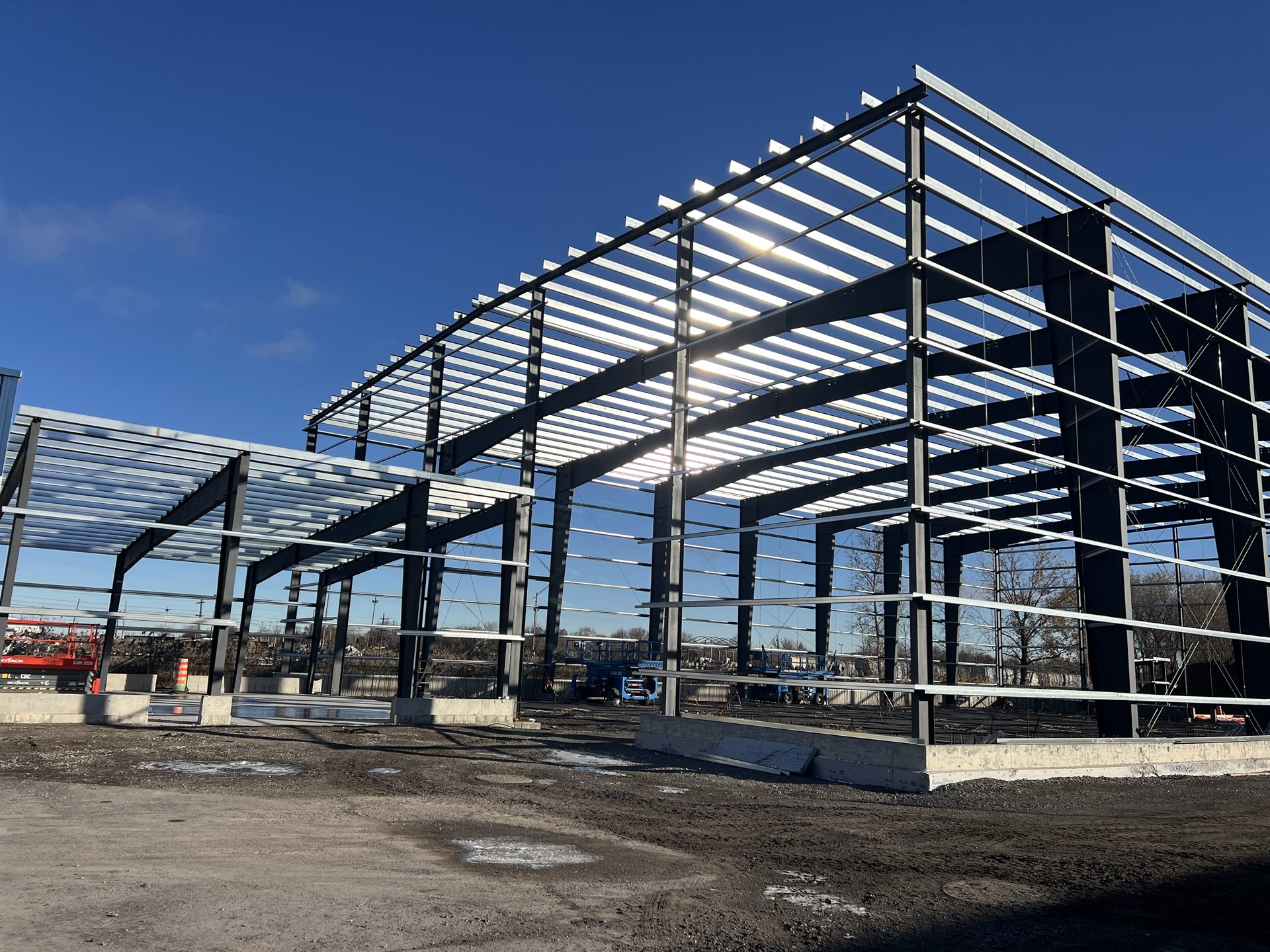
- Fast erection and easy future expansion.
Where wood wins
- Small, simple structures where a local framer can build cheaply.
- Projects that need lots of interior wood finishes anyway.
Steel vs concrete
Concrete is excellent for foundations, and every steel building sits on one. As the main structure, though, concrete walls and roofs are heavy, slow and costly for large single-storey buildings. Steel is far lighter for the strength it gives. A steel frame on a concrete foundation is the most cost-effective combination for most commercial, industrial and agricultural buildings.
The downsides of steel, honestly
- Thermal bridging and condensation: steel conducts heat. Heated buildings need proper insulation and vapour control. See insulating a steel building in Canada.
- Price volatility: steel prices change, so quotes have shorter validity windows.
- Small buildings: under a few hundred square feet, wood is often cheaper.
Which should you choose?
If you need a durable building with wide open space, such as a warehouse, shop, truck terminal, farm building or commercial facility, steel is almost always the better long-term value. For a precise comparison on your site, send us your project and we'll price it out. Or start with the cost guide: how much does a steel building cost in Canada.
Frequently Asked Questions
Is it cheaper to build a building out of wood or metal?
For small, simple structures wood is often cheaper upfront. For larger buildings with wide clear spans, steel is usually competitive or cheaper once speed of construction, maintenance and lifespan are counted.
Is steel cheaper than concrete?
For the main structure of a large single-storey building, steel is usually cheaper and much faster than concrete. Concrete remains the best choice for the foundation underneath the steel.
Which is better, steel or concrete?
Each has its role: concrete for foundations and slabs, steel for the frame and envelope. Combined, they give the best balance of cost, speed and durability for commercial, industrial and farm buildings.
Planning a steel building?
Get a free, no-obligation quote from a Canadian manufacturer, engineered for your site.